Overview of Dog Licensing in Harrison County, Texas
If you’re searching for how to register my dog in Harrison County, Texas, the most important thing to know is that “registration” is usually handled locally—most often by a city animal control program (for dogs living inside city limits) rather than a single countywide licensing office. In practice, getting a dog license in Harrison County, Texas typically means confirming your dog is currently vaccinated against rabies and then registering (when required) through the appropriate local animal control or municipal office where you live.
Where to Register or License Your Dog in Harrison County, Texas
Because licensing is often handled at the city level, the offices below are examples of official local government or public health contacts in or serving Harrison County, Texas. Ask which office handles animal control dog license Harrison County, Texas questions for your exact address (inside city limits vs. unincorporated county areas).
City of Marshall — Marshall Pet Adoption Center & Animal Control
Address: 607 E End Blvd S
City/State/ZIP: Marshall, TX 75670
Phone: (903) 935-4530
Office hours: Not listed
Use this office if you live in Marshall city limits or if you’re directed here for local animal control licensing rules, rabies enforcement questions, or pet-related ordinances.
Marshall–Harrison County Health District
Address: 805 Lindsey Drive
City/State/ZIP: Marshall, TX 75670
Phone: (903) 938-8338
Email: Not listed
This is a key public health contact for rabies-related questions (for example: guidance after bites/exposures, vaccination documentation questions, and health district services that may intersect with rabies control efforts).
City of Hallsville — City Office (General Contact)
Address: Not listed
City/State/ZIP: Hallsville, TX ZIP not listed
Phone: (903) 668-2313
Email: citysecretary@hallsville.us
If you live in Hallsville city limits, start here to ask whether Hallsville requires a local pet license and which department handles animal control and rabies enforcement.
Harrison County Sheriff’s Office (General Contact)
Address: 200 W. Houston St. (Mailing: P.O. Box 568)
City/State/ZIP: Marshall, TX ZIP not listed
Phone: (903) 923-4000
Email: Not listed
For residents outside city limits, animal-related calls are sometimes routed through county law enforcement or a designated local authority depending on the situation. This office can help direct you to the correct local animal control or rabies control contact for your area.
How Dog Licensing Works Locally in Harrison County, Texas
1) Start by confirming whether you are inside city limits
In many Texas counties, including Harrison County, “dog registration” is primarily a city function. That means the steps can differ depending on whether you live in a city like Marshall or Hallsville, versus an unincorporated (county) address. If you’re not sure, ask your city office or the City of Marshall Animal Control to confirm which local rules apply.
2) Expect proof of rabies vaccination to be the foundation
Whether your city issues a physical license tag, maintains a registration record, or focuses on enforcement through animal control calls, the most common requirement tied to a dog license in Harrison County, Texas is proof of a current rabies vaccination administered by a veterinarian. Keep a copy of your rabies certificate in a safe place and consider keeping a digital copy as well.
3) Registration may be tied to city ordinances and animal control enforcement
Local animal control programs may enforce rules around roaming animals, leash requirements, nuisance complaints, and bite investigations. In some jurisdictions, licensing is also tied to reclaiming a pet from an animal shelter or resolving certain citations. If you are asking about an animal control dog license Harrison County, Texas requirement, you’re usually looking for a city ordinance requirement (or a city process) rather than a commercial “pet registry.”
4) If your dog was recently adopted or you just moved
If you adopted from a shelter or moved into Harrison County, Texas, you may have to complete registration within a certain time window under local rules (if your city has a licensing ordinance). Even if a formal license is not required where you live, updating ID tags and microchip information is strongly recommended because it helps animal control reunite lost pets with owners quickly.
How Dog Licensing Works in Harrison County, Texas
What “dog licensing” usually means
A local dog license is typically a municipal record (and sometimes a tag) connecting your dog to you as the owner, often linked to rabies vaccination status. If your city requires licensing, it may be handled by the city’s animal control unit, a city office, or a local partner office designated by ordinance.
Rabies vaccination requirements (what residents should know)
Rabies is a fatal disease that can be transmitted to people and animals, so Texas public health guidance and local enforcement focus heavily on vaccination and bite/exposure response. While details can vary by city, a safe baseline assumption for Harrison County residents is:
- Your dog should be vaccinated against rabies by a veterinarian and kept current according to the vaccine schedule.
- You should retain a rabies vaccination certificate as proof (often requested for licensing/registration, boarding, grooming, or travel).
- If a bite/exposure occurs, local authorities may require quarantine or other steps based on the animal’s vaccination status and the circumstances.
If you have questions about rabies documentation, reporting, or local guidance after an exposure, the Marshall–Harrison County Health District is a key official starting point.
What if you live outside city limits?
In unincorporated areas, there may not be a single countywide “dog tag” program. Even when a formal license is not issued countywide, rabies vaccination and responsible ownership expectations still apply, and enforcement can be handled through the appropriate local authority depending on the incident (for example, a bite report, a dangerous animal complaint, or a nuisance issue).
Avoid third-party “pet registration” services
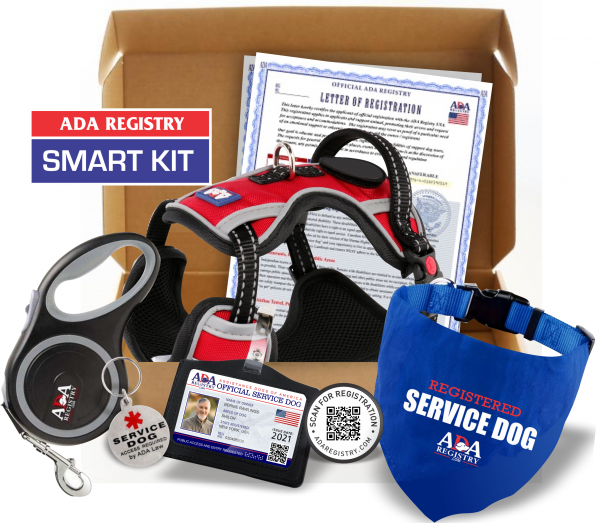
If you see websites offering instant registration or a “national database” for a fee, that is generally not the same as an official local license. For official registration, stick with city animal control, your city office, and/or the local health district guidance.
Service Dog Laws in Harrison County, Texas
Service dog status is not the same as a local dog license
A dog license in Harrison County, Texas (when required) is a local animal control or city registration function. A service dog, by contrast, is defined by disability law based on training and the tasks the dog performs for a person with a disability. Service dog status is a legal classification—not a product you buy online and not the same as a city pet license tag.
What makes a dog a service dog?
Generally, a service dog is individually trained to do work or perform tasks directly related to a person’s disability (for example, guiding a person who is blind, alerting to a seizure, retrieving items, interrupting self-harm behaviors, or assisting with mobility).
Do service dogs need licensing or rabies vaccination?
Service dogs are still dogs. If your city requires licensing for all dogs, service dogs are typically expected to follow the same local public health requirements (such as current rabies vaccination). If your local office uses a licensing system, ask whether there are any fee waivers or documentation options for service animals—without assuming that a third-party “registration certificate” is required or accepted.
Public access basics
In general, service dogs may have public access rights in places where pets are not allowed, as long as the dog is under control and housebroken. However, disruptive or unsafe behavior can still be addressed by a business under applicable rules. If you need a definitive interpretation for a specific scenario, consult official legal guidance.
Emotional Support Animal Rules in Harrison County, Texas
Emotional support animals are not service dogs
An emotional support animal (ESA) can provide comfort that helps with a person’s mental or emotional health, but an ESA is not the same as a service dog under disability laws that require task training. This matters because ESA status generally does not provide the same public access rights as a trained service dog.
ESAs and local licensing
ESA status does not replace local requirements. If a city requires registration, you should still follow the process for where to register a dog in Harrison County, Texas based on your address. When in doubt, contact your city animal control office and ask how their pet licensing rules apply.
Housing vs. public access
ESA-related accommodations most commonly arise in housing contexts. If you are requesting a housing accommodation, be prepared for your housing provider to have a process for documentation consistent with applicable rules. Even with an accommodation, routine animal health and safety requirements (like rabies vaccination) typically still apply.
Be cautious with “ESA registration” claims
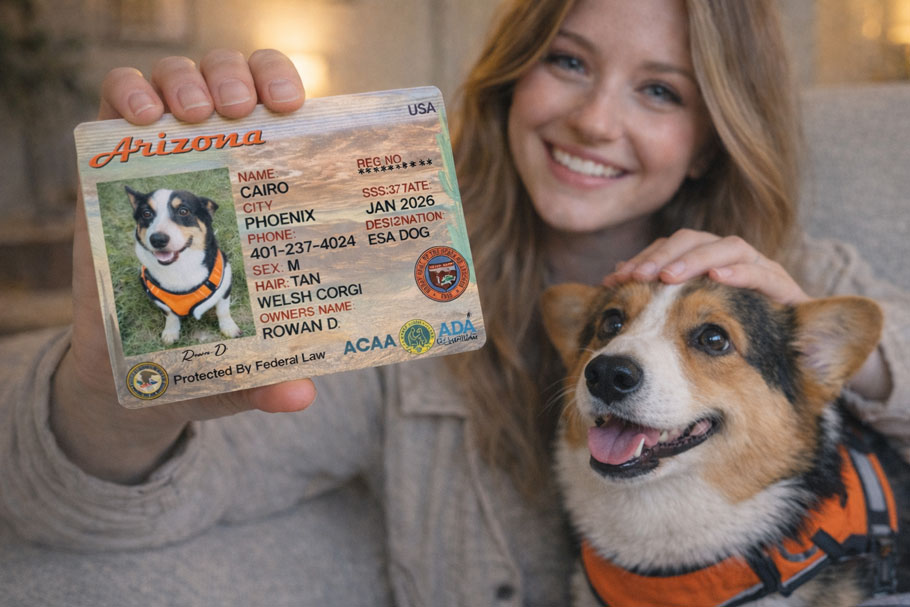
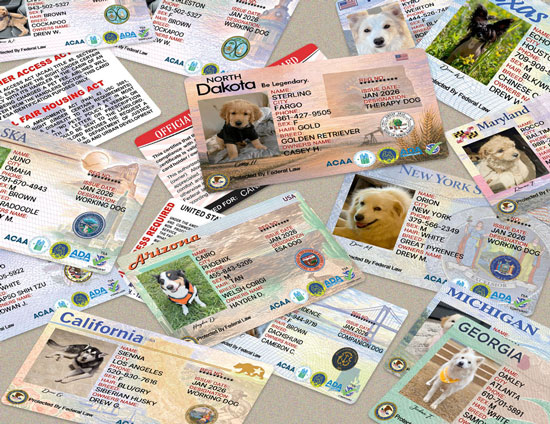
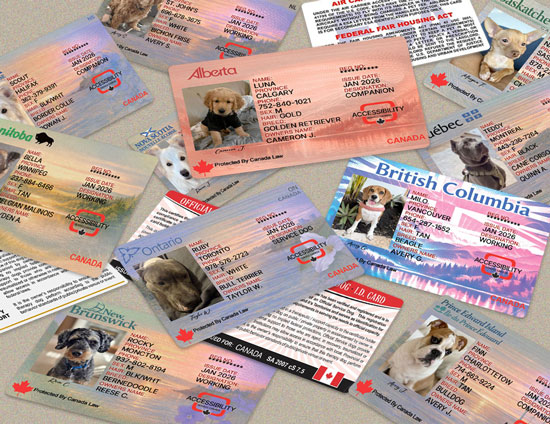
Many websites sell ESA IDs, certificates, or “registrations.” Those are not the same thing as a local government license and may not be meaningful for local enforcement, vaccination compliance, or municipal animal control requirements.
Frequently Asked Questions
Disclaimer
Licensing requirements and office locations may change. Residents should verify details with their local animal services office within Harrison County, Texas.